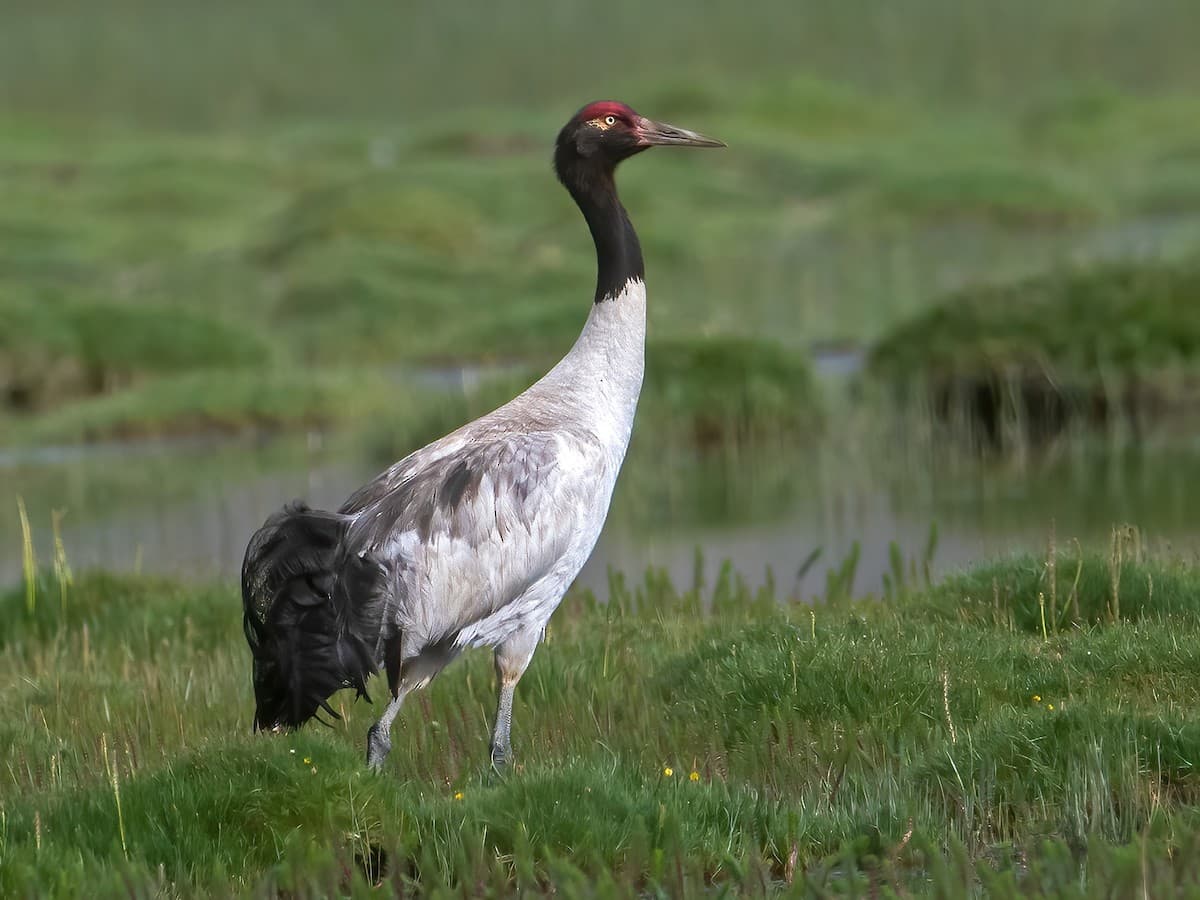
Black-necked Crane
The black-necked crane is the last crane species to be scientifically described and the only one that breeds and winters in alpine environments. Found on the Tibetan Plateau and in the high-altitude valleys of Bhutan and Arunachal Pradesh, it holds deep spiritual significance in Buddhist culture and is the national bird of Bhutan. Classified as Vulnerable, it winters in the wetlands of Bhutan and Arunachal Pradesh.
Average Length
115-120 cm
Average Weight
5-6 kg
Lifespan
20-30 years
Top Speed
60 km/h
WildAtlas insight
Medium elusiveness
Spotting this species in the wild may take some patience, based on its typical traits and behavior.
Why this grade?
These are some of the biological and behavioral factors, among others, that WildAtlas considers when deriving this species level grade.
- Animal group
- Bird
- Diet
- Omnivore
- Activity
- Diurnal
- Social behavior
- Pair
This proprietary WildAtlas grade describes the animal in general and stays the same across parks. It is separate from park level insights, which depend on local conditions and data.
Quick Facts
The black-necked crane is the only crane that breeds and lives at high altitudes.
It is considered sacred by Tibetan Buddhists and features prominently in local culture.
The cranes winter in Tawang and Sangti valleys of Arunachal Pradesh.
Habitat & Range
Habitats
Regions
Behavior & Reproduction
Activity Pattern
Diurnal
Social Structure
Pair
Gestation Period
30-33 days incubation
Litter Size
2
Predators
Golden Eagles, Wolves, Humans
Found in Parks
Where should you look for black-necked crane? Explore each park's biome, habitat, and local conditions. Population, density, and sighting trends will shape future park specific insights.