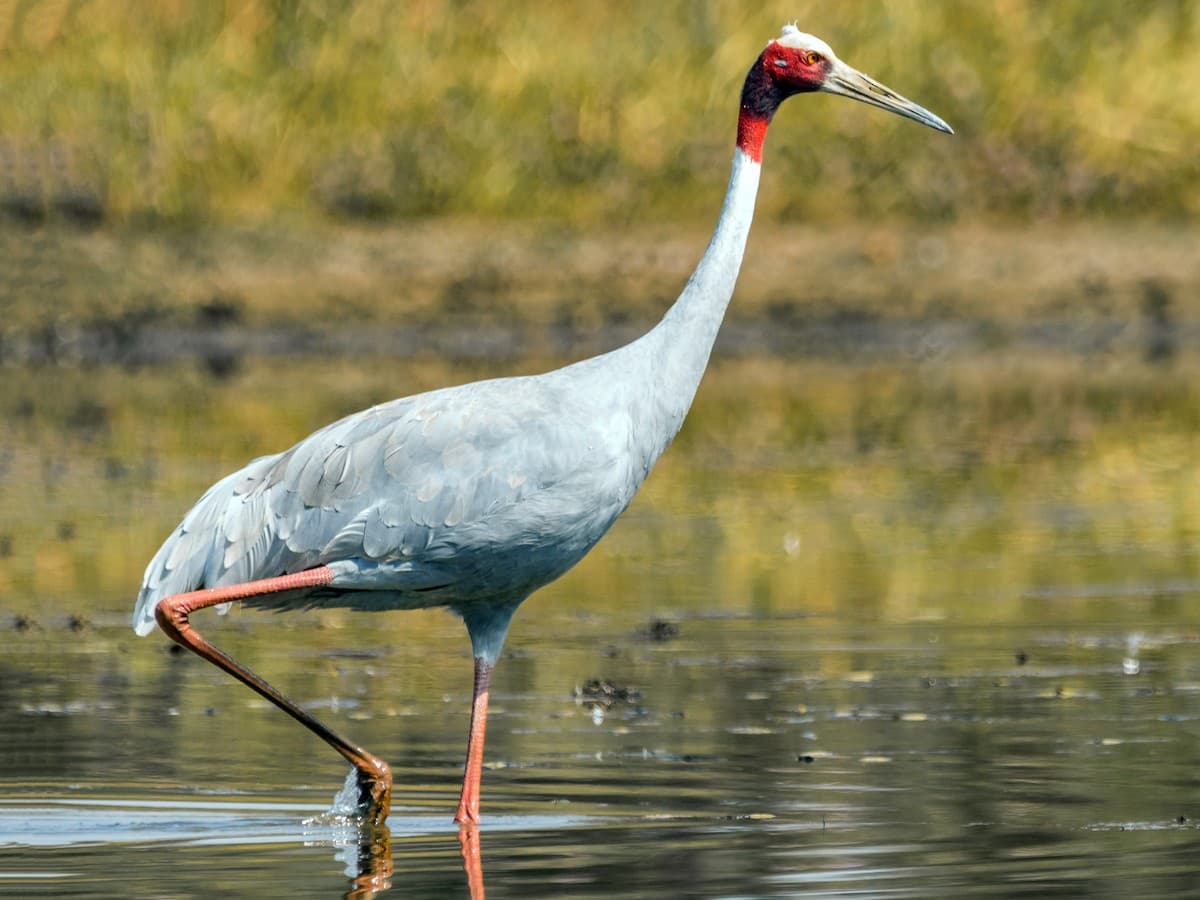
Sarus Crane
The sarus crane is the world's tallest flying bird, reaching up to 1.8 metres in height, and is native to the Indian subcontinent, Southeast Asia, and Australia. Revered in Indian culture as a symbol of marital fidelity — pairs mate for life and are rarely seen apart — it is the state bird of Uttar Pradesh. Although still relatively common in some parts of India, the sarus crane has declined sharply due to wetland drainage and agricultural intensification.
Average Length
1.8 m
Average Weight
8.4 kg
Lifespan
30-40 years
Top Speed
N/A
WildAtlas insight
Low elusiveness
This species is generally easier to observe in the wild, based on its typical traits and behavior.
Why this grade?
These are some of the biological and behavioral factors, among others, that WildAtlas considers when deriving this species level grade.
- Animal group
- Bird
- Diet
- Omnivore
- Activity
- Diurnal
- Social behavior
- Pair
This proprietary WildAtlas grade describes the animal in general and stays the same across parks. It is separate from park level insights, which depend on local conditions and data.
Quick Facts
The sarus crane is the world's tallest flying bird, standing up to 1.8 m.
They mate for life and are a symbol of fidelity in Indian culture.
The sight of a dancing pair of sarus cranes is considered auspicious in parts of Uttar Pradesh.
They are found in wetlands and agricultural fields across northern India and often nest in paddy fields.
Habitat & Range
Habitats
Regions
Behavior & Reproduction
Activity Pattern
Diurnal
Social Structure
Pair
Gestation Period
30 days incubation
Litter Size
2
Predators
Foxes, Jackals, Eagles, Humans
Found in Parks
Where should you look for sarus crane? Explore each park's biome, habitat, and local conditions. Population, density, and sighting trends will shape future park specific insights.