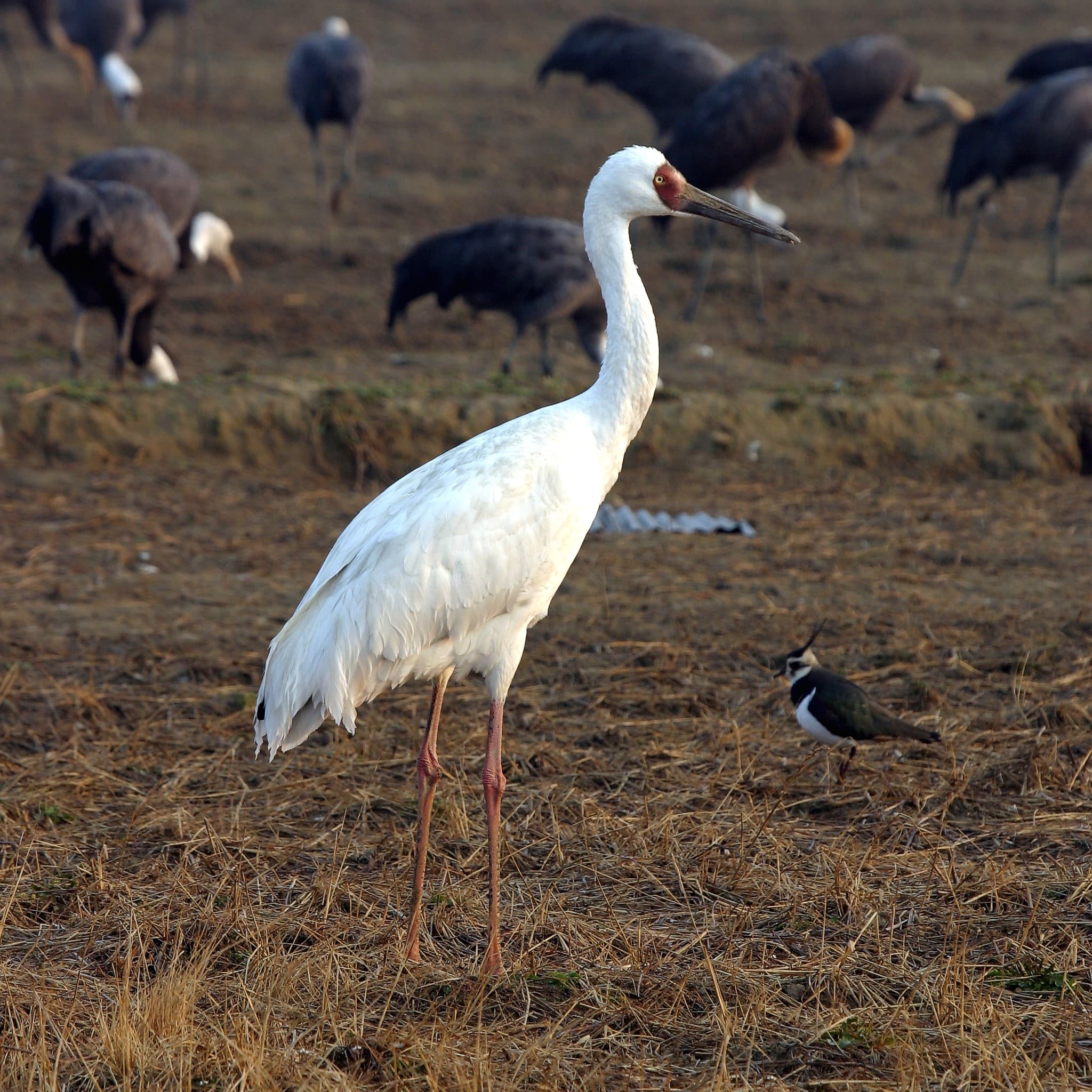
Siberian Crane
The Siberian crane is a large, strikingly white migratory bird that undertakes one of the longest migrations of any bird species, travelling from its Siberian breeding grounds to wintering sites in India and China. Listed as Critically Endangered, only a single small population now winters in India — at Bharatpur's Keoladeo National Park — after its central Asian population collapsed entirely. Loss of wetland habitats along its entire migratory route is the primary threat.
Average Length
1.4 m
Average Weight
6 kg
Lifespan
25 years
Top Speed
N/A
WildAtlas insight
High elusiveness
This species is naturally difficult to observe in the wild, even where it is known to occur.
Why this grade?
These are some of the biological and behavioral factors, among others, that WildAtlas considers when deriving this species level grade.
- Animal group
- Bird
- Diet
- Omnivore
- Activity
- Diurnal
- Social behavior
- Flock
This proprietary WildAtlas grade describes the animal in general and stays the same across parks. It is separate from park level insights, which depend on local conditions and data.
Quick Facts
The Siberian crane historically wintered at Keoladeo (Bharatpur) National Park in India.
The last confirmed sighting of a wild Siberian crane at Keoladeo was in 2002.
Fewer than 4,000 Siberian cranes survive globally, making it critically endangered.
The Indian wintering population is functionally extinct due to hunting along migration routes.
Habitat & Range
Habitats
Regions
Behavior & Reproduction
Activity Pattern
Diurnal
Social Structure
Flock
Gestation Period
29 days incubation
Litter Size
2
Predators
Eagles, Humans
Found in Parks
Where should you look for siberian crane? Explore each park's biome, habitat, and local conditions. Population, density, and sighting trends will shape future park specific insights.