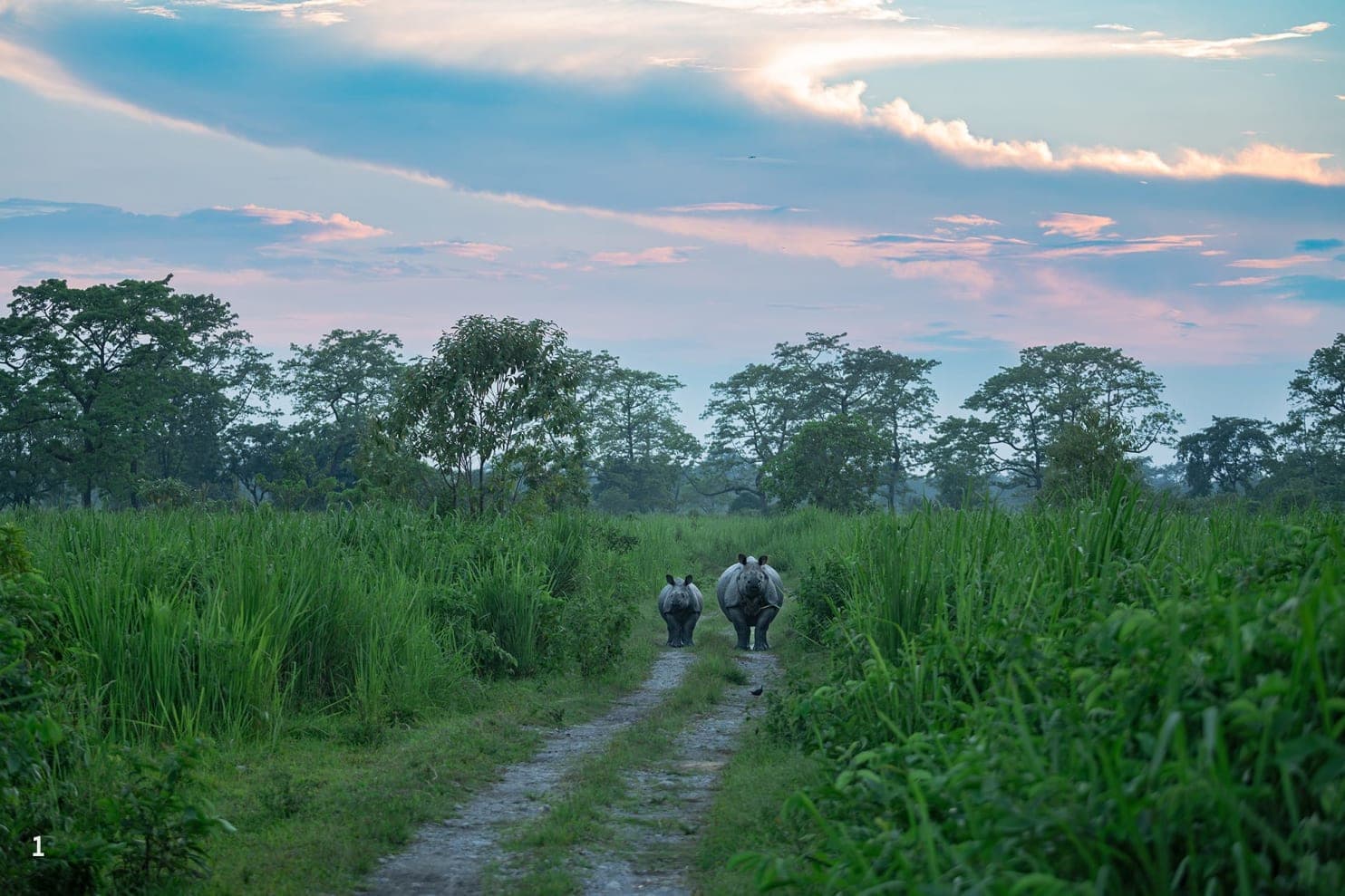
wild-great-one-horned-rhinoceros-is-standing-on-the-road-in-india-kaziranga-national
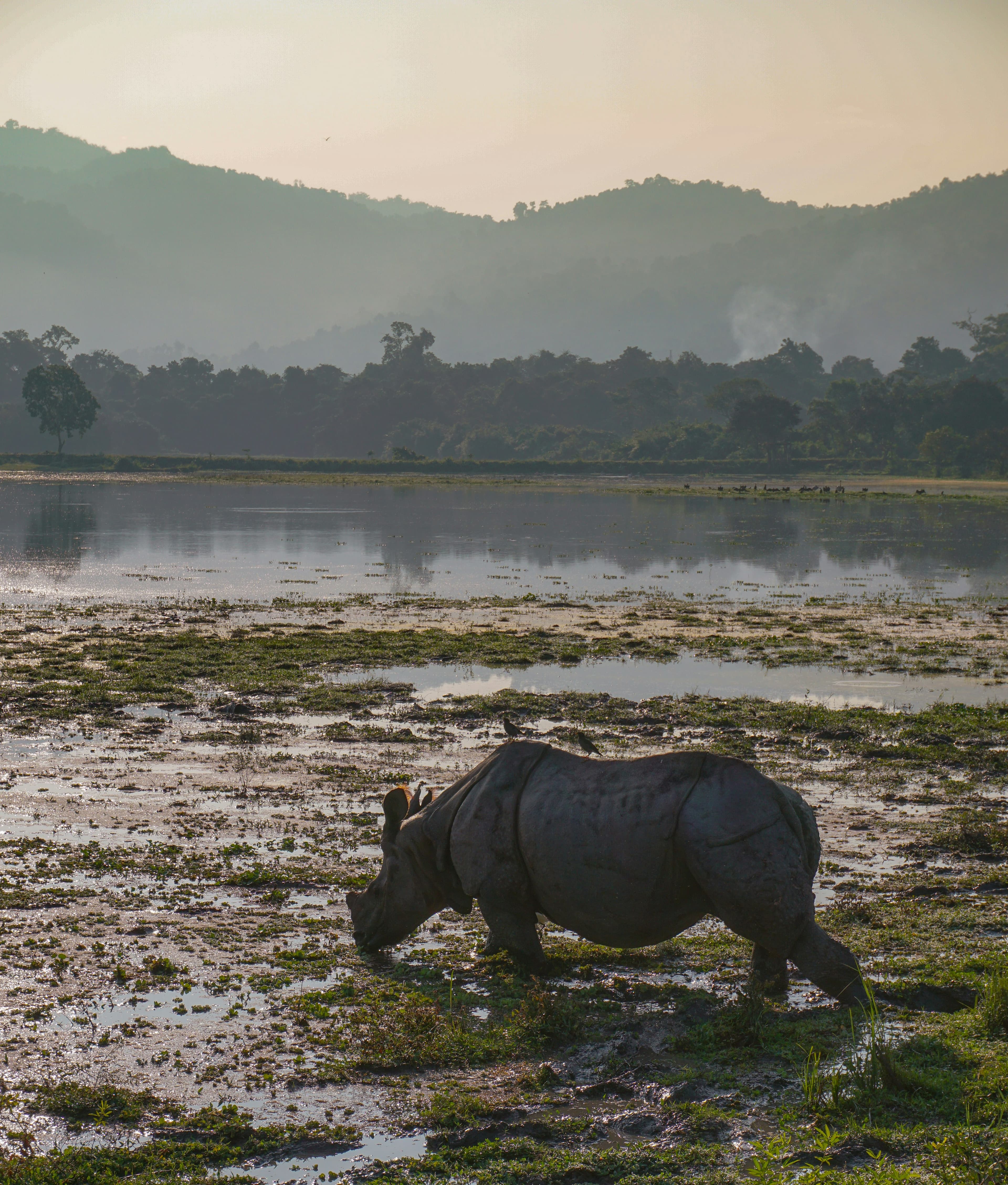
The Indian one-horned rhinoceros, or greater one-horned rhino, is the largest of the three Asian rhinoceros species. Once widespread across the Indo-Gangetic Plain, it was hunted to near-extinction by the early 20th century; targeted conservation in India and Nepal has helped populations recover to over 4,000 individuals today. It is found primarily in the tall grasslands and forests of northern India and Nepal.
Average Length
3.8 m
Average Weight
2200 kg
Lifespan
35-45 years
Top Speed
55 km/h
WildAtlas insight
Low elusiveness
This species is generally easier to observe in the wild, based on its typical traits and behavior.
Why this grade?
These are some of the biological and behavioral factors, among others, that WildAtlas considers when deriving this species level grade.
- Animal group
- Mammal
- Diet
- Herbivore
- Activity
- Crepuscular
- Social behavior
- Solitary
This proprietary WildAtlas grade describes the animal in general and stays the same across parks. It is separate from park level insights, which depend on local conditions and data.
Quick Facts
The Indian rhino has a single horn made of keratin, the same material as human fingernails.
Two-thirds of the world population lives in Kaziranga National Park in Assam.
Despite their bulk, rhinos can run at speeds up to 55 km/h.
Their skin forms thick folds giving it an armour-plated appearance.
Habitat & Range
Habitats
Regions
Behavior & Reproduction
Activity Pattern
Crepuscular
Social Structure
Solitary
Gestation Period
16 months
Litter Size
1
Predators
Tigers (calves), Humans
Found in Parks
Where should you look for indian one-horned rhinoceros? Explore each park's biome, habitat, and local conditions. Population, density, and sighting trends will shape future park specific insights.